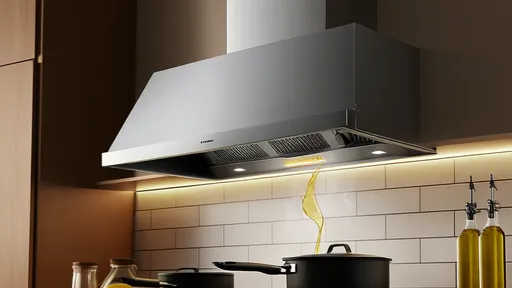
There is perhaps no more frustrating kitchen occurrence than reaching for a spatula mid-sauté only to be greeted by a cold, greasy drip from the range hood above. That dreaded drop of oil is more than just a nuisance; it's a sign that your kitchen's primary defender against grime and odor is faltering. A leaky range hood undermines its very purpose, allowing the byproducts of cooking to settle not just on its surfaces, but back onto your stove, your counters, and even your ingredients. The good news is that this common problem is almost always solvable, not with complex tools or expensive service calls, but with a deeper understanding of how your hood works and a commitment to a few key maintenance rituals.
The journey to a drip-free cooking experience begins not with a wrench, but with knowledge. To conquer the drip, you must first understand its origin. The primary culprit is almost never a single catastrophic failure, but a cascade of smaller, often overlooked issues. The hot, moist air and aerosolized fats and oils rising from your pans are sucked into the hood. As this vapor-laden air travels through the metal ductwork, it begins to cool. This cooling causes condensation, and that condensation mixes with the grease particles, forming a viscous liquid that clings to every surface. When enough of this mixture accumulates, gravity takes over, and it begins its slow, inevitable descent back toward your stove. This process is natural, but the rate and severity of the accumulation are entirely within your control.
The single most powerful weapon in your arsenal against dripping oil is a consistent and thorough cleaning schedule. This goes far beyond wiping down the visible stainless steel exterior. The true battle is fought inside, in the hidden passages where grease conspires to fall. For those with ductless, recirculating hoods, the charcoal filters are your first line of defense. These are not permanent fixtures; they are consumable items designed to trap odors and finer grease particles. When they become saturated—typically every three to six months depending on usage—they lose all effectiveness. The fan then simply blows grease-laden air against a clogged filter, forcing condensation and drips. Replacing these filters on a strict schedule is non-negotiable.
For all range hoods, ducted or otherwise, the metal grease filters or baffles are the main event. These are the mesh or angled metal panels that serve as the initial barrier. Their job is to capture the bulk of the grease, and they do it remarkably well, which is precisely why they become so filthy so quickly. A filter caked in old, hardened grease doesn't just become inefficient; it becomes the source of the problem. It restricts airflow, causing the motor to work harder and the entire system to overheat. More critically, it creates a surface so saturated that hot vapor instantly condenses upon contact, with nowhere to go but down. The solution is a deep clean. Soaking these filters in a solution of degreaser and hot water, or a mixture of baking soda and vinegar, followed by a gentle scrub, will restore their ability to trap grease effectively and allow air to flow freely.
But cleaning the removable parts is only half the story. The interior of the hood itself, the cavity behind the filters, is a secret grease reservoir. Over time, a significant amount of grime splatters and accumulates on the fan blades, the motor housing, and the interior walls. This residue is what often melts and drips during extended cooking sessions. Using a strong degreasing spray and a scraper or abrasive sponge to meticulously clean this interior space is a messy but profoundly effective task. Doing this quarterly will eliminate a major source of drips and also prevent unpleasant burnt odors from old grease being heated repeatedly by the hood's motor.
Beyond cleaning, the very way you use your hood can prevent problems before they start. A common mistake is turning on the hood only after smoke has already filled the kitchen. By then, an immense amount of grease and vapor is already loose and condensing on every cool surface. The correct practice is to switch the hood on before you even begin heating your pan. This establishes a strong, steady airflow from the very first moment vapors are produced, capturing them immediately and pulling them directly into the filtration system. Furthermore, don't be shy about using the higher fan speeds. A low setting might be adequate for a gentle simmer, but for searing, frying, or boiling, you need the maximum suction power to ensure all vapor is captured and evacuated efficiently, leaving no time for it to condense inside the ductwork.
Finally, never underestimate the role of preventative care and the environment around your hood. Ensure the damper flaps on a ducted hood are moving freely and aren't stuck open or sealed shut with grime. Check that all seals and connections are tight, preventing moist air from leaking into cabinetry where it can cause condensation issues. Even the humidity in your kitchen plays a part. Cooking with lids on pots when possible, and ensuring your kitchen is well-ventilated by cracking a window, can reduce the overall moisture load your hood has to handle, making its job easier and reducing the potential for condensation.
Achieving a drip-free range hood is not about finding a magic bullet. It is about embracing a holistic approach to kitchen maintenance. It is the understanding that this appliance is a dynamic system that requires regular attention. By committing to a regimen of deep cleaning the filters and interior, using the hood proactively at appropriate speeds, and ensuring its components are in good working order, you transform it from a passive, dripping nuisance back into an active, powerful ally. The result is a cleaner kitchen, better air quality, and the peace of mind to cook with abandon, never again flinching at the threat of a falling drop of oil.
By /Aug 20, 2025

By /Aug 20, 2025

By /Aug 20, 2025

By /Aug 20, 2025

By /Aug 20, 2025

By /Aug 20, 2025

By /Aug 20, 2025

By /Aug 20, 2025
By /Aug 20, 2025
By /Aug 20, 2025

By /Aug 20, 2025
By /Aug 20, 2025

By /Aug 20, 2025

By /Aug 20, 2025

By /Aug 20, 2025
By /Aug 20, 2025
By /Aug 20, 2025

By /Aug 20, 2025
By /Aug 20, 2025

By /Aug 20, 2025